
The High Street Betting Debate: What Ireland Can Learn from the UK's Regulatory Struggles
The debate around high street betting shops in the UK has reignited with fresh intensity, and as someone who analyses the iGaming industry from a financial and market perspective, I find the nuances of this discussion deeply relevant to Ireland's own evolving gambling landscape. The UK's experience offers a cautionary tale — and some valuable lessons — for how Ireland approaches the regulation of both retail and online gambling.
At its core, the UK high street betting debate is about far more than bookmakers. It's about community, economic contribution, employment, and the delicate balance between consumer protection and commercial viability. These are questions that Irish policymakers, operators, and players will increasingly need to grapple with as the Gambling Regulatory Authority of Ireland (GRAI) takes shape.
The UK Context: A Perfect Storm
The UK gambling industry has faced a turbulent few years. After a volatile 2025 that ended with significant tax hikes planned for April 2026, operators were already reassessing their futures in the market. The new taxes primarily target online gambling, with in-person betting initially spared — a decision that reflected the government's recognition of the economic importance of the high street.
But the respite for retail betting has been short-lived. A vocal coalition of politicians, led by figures like Hannah Spencer of the Green Party, has been pushing hard for tighter regulation of betting shops. Spencer, widely expected to win the Gorton and Denton by-election and become the fifth Green Party MP, has made retail betting regulation a centrepiece of her campaign.
The Betting and Gaming Council (BGC) has pushed back strongly, citing the industry's substantial economic contribution: £6.8 billion to the UK economy annually, £4 billion in tax revenue, and 109,000 jobs. Betting shops alone employ 42,000 people, many of whom live locally — a point that resonates in communities where alternative employment opportunities may be limited.
The Community Dimension
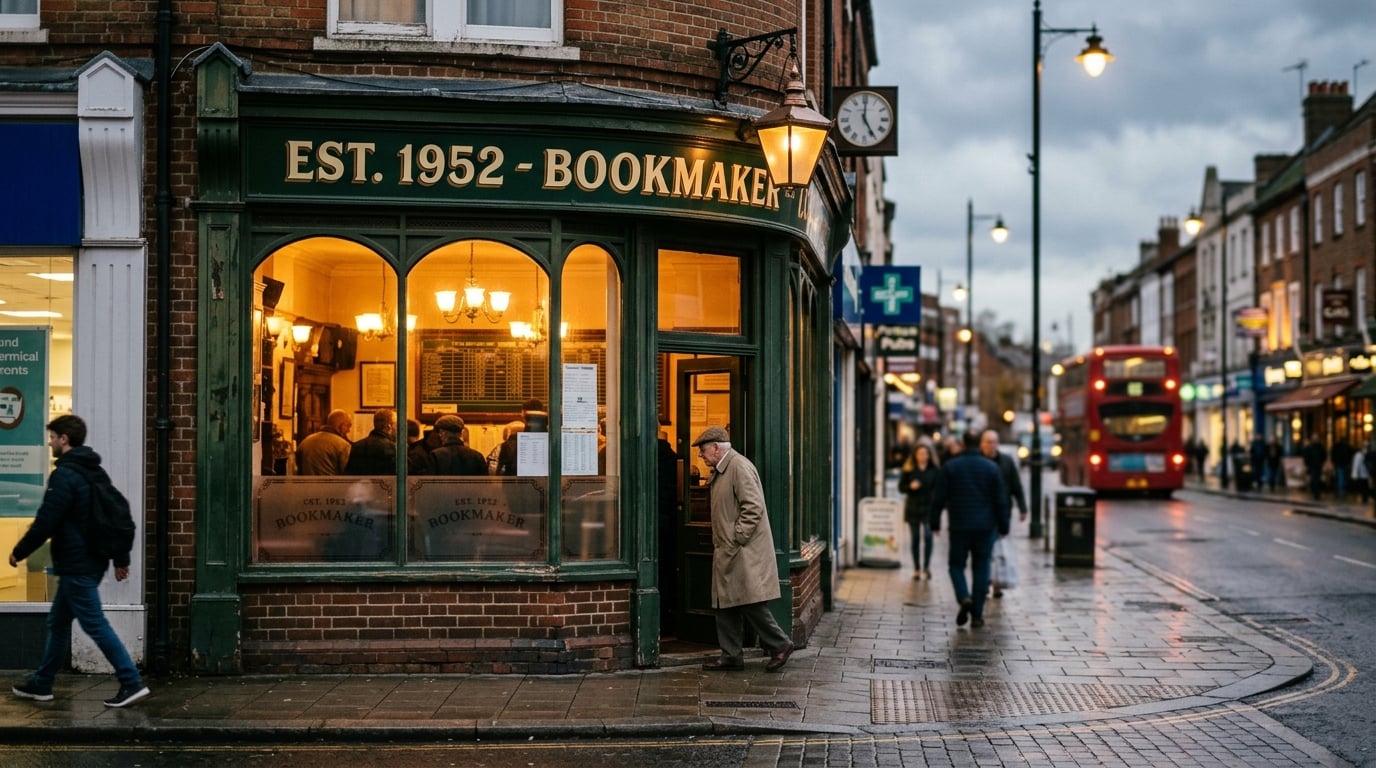
What often gets lost in the political debate is the social function that betting shops serve. As the BGC has argued, bookmakers are far more than places to place a bet — they are community hubs, particularly for older men who might otherwise face social isolation. In an era of increasing digitalisation and declining high street footfall, the human interaction that retail betting provides has genuine social value.
This argument may seem counterintuitive to those who view gambling primarily through the lens of harm. But the evidence suggests that regulated retail betting, with its face-to-face interactions and mandatory age verification, can actually support safer gambling outcomes compared to anonymous online play. Independent audits show compliance rates above 90% for age verification in UK betting shops, with 'Think 25' policies in place across the sector.
Since 2019, more than 2,400 UK betting shops have closed, leaving just 5,870 in operation. Each closure represents not just a business shutting down, but a community losing a gathering point and local jobs disappearing. The economic and social costs of over-regulation are real, even if they're less visible than the harms associated with problem gambling.
What This Means for the Irish Market
Ireland has its own network of betting shops, and the Irish gambling market has historically been dominated by retail operators. The transition to online gambling has been significant, but retail betting remains an important part of the industry's fabric — and of Irish social life.
The GRAI's mandate includes regulating both retail and online gambling, and the UK's experience suggests that getting this balance right is crucial. Overly restrictive regulation of retail betting could push players towards online platforms — including potentially unlicensed ones — while failing to address the underlying demand for gambling entertainment.
From a financial analysis perspective, the Irish gambling market presents some interesting dynamics:
- Market size: Ireland's gambling market is estimated to be worth over €6 billion annually, with online gambling accounting for a growing share.
- Tax contribution: Licensed gambling operators contribute significantly to the Irish exchequer through betting duty and other taxes.
- Employment: The sector supports thousands of jobs across retail and online operations.
- Consumer spending: Irish players are sophisticated consumers who increasingly expect the same quality of experience online as they would in a physical venue.
The Online Opportunity for Irish Players
While the high street debate rages in the UK, the online casino market continues to grow in Ireland. For players, this growth brings both opportunities and responsibilities. The best online casinos offer experiences that rival — and in many ways surpass — what's available in retail settings: a wider range of games, more generous bonuses, greater convenience, and sophisticated responsible gambling tools.
Our casino listings feature operators that have been thoroughly vetted for licensing, game quality, payment security, and customer support. These are the platforms that offer Irish players genuine value — not just in terms of bonuses, but in terms of the overall experience.
Speaking of bonuses, the online market offers Irish players access to welcome packages and ongoing promotions that simply aren't available in retail settings. Our bonuses section provides detailed analysis of the best current offers, with full transparency about wagering requirements and terms. Understanding the true value of a bonus — not just the headline figure — is essential to making smart decisions about where to play.
The Regulatory Balance: Lessons from the UK
The UK's experience offers several lessons for Ireland's emerging regulatory framework:
1. Avoid Regulatory Overreach
Excessive regulation doesn't eliminate gambling — it drives it underground or pushes players towards unlicensed platforms. The UK's tax hikes on online gambling, while generating short-term revenue, risk undermining the licensed market's competitiveness and pushing players towards offshore operators.
2. Recognise the Economic Contribution
The gambling industry's contribution to employment, tax revenue, and community life deserves recognition in policy discussions. Regulation should be proportionate to the risks, not driven by moral panic or political opportunism.
3. Focus on Harm Reduction, Not Prohibition
The most effective approach to gambling regulation focuses on reducing harm rather than restricting access. This means robust responsible gambling tools, effective age verification, and support for those who develop problems — not blanket restrictions that penalise the majority of players who gamble responsibly.
4. Embrace Technology
Modern regulatory tools — including AI-powered monitoring, real-time data analysis, and sophisticated KYC systems — can help regulators identify and address problem gambling more effectively than blunt restrictions. Ireland's GRAI should look to incorporate these tools into its regulatory framework from the outset.
Payment Methods and Financial Safety
One area where online casinos have a clear advantage over retail betting is in the sophistication of their payment infrastructure. Licensed online casinos offer a wide range of secure payment methods, from traditional bank transfers and debit cards to e-wallets and, increasingly, cryptocurrency options.
For Irish players, understanding the payment landscape is an important part of making smart gambling decisions. Our payment guides cover everything from deposit and withdrawal times to fees and security considerations. Choosing the right payment method can make a significant difference to your overall casino experience.
The Bigger Picture: A Maturing Industry
The UK high street betting debate, for all its political heat, reflects a broader truth about the gambling industry: it is maturing. The days of unregulated growth are over. Operators, regulators, and players are all grappling with questions about what a sustainable, responsible gambling market looks like.
For Ireland, this maturation process is just beginning. The GRAI represents a significant step forward in creating a regulatory framework that can protect players while allowing the industry to thrive. Getting the balance right — between consumer protection and commercial viability, between online and retail, between restriction and access — will be the defining challenge of the next decade.
As a finance and bonuses analyst, I believe the key is transparency. Players deserve clear, accurate information about the products they're using — whether that's a bonus offer, a payment method, or a casino's regulatory status. Operators deserve a level playing field where compliance is rewarded and bad actors are effectively excluded. And regulators deserve the tools and resources to do their jobs effectively.
What Irish Players Should Do Now
While the regulatory debate plays out, Irish players can take practical steps to ensure they're getting the best possible experience:
- Choose licensed operators: Always verify that a casino holds a valid licence from a recognised regulator before depositing. Our casino listings only feature properly licensed operators.
- Understand your bonuses: Don't be dazzled by headline bonus figures. Read the terms carefully, or use our bonus analysis to understand the true value of any offer.
- Use responsible gambling tools: Set deposit limits, session time limits, and loss limits before you start playing. These tools are there to help you stay in control.
- Know your payment options: Choose payment methods that offer security, speed, and low fees. Our guides can help you navigate the options.
- Stay informed: The regulatory landscape is changing. Follow Irish Fortune for the latest news and analysis on gambling regulation in Ireland and across Europe.
Conclusion
The UK's high street betting debate is a reminder that gambling regulation is never simple. It involves competing interests, complex trade-offs, and genuine disagreements about values and priorities. The debate needs nuance — not conjecture, not culture war politics, but careful analysis of evidence and a genuine commitment to outcomes that work for players, operators, and society as a whole.
Ireland has an opportunity to learn from the UK's experience and build a regulatory framework that gets these trade-offs right from the start. The GRAI's work will be crucial in shaping the future of Irish gambling — and at Irish Fortune, we'll be watching closely and keeping our readers informed every step of the way.
In the meantime, the best thing Irish players can do is make informed choices: choose licensed casinos, understand the products you're using, and gamble responsibly. That's the foundation of a healthy, sustainable gambling market — and it starts with each individual player.
Clara Byrne, Finance & Bonuses Analyst, Irish Fortune


