
Lefty Rosenthal's Casino Car-Bombing Site Sold: The Real Story Behind the Movie
If you've ever watched Martin Scorsese's 1995 masterpiece Casino — and if you're a fan of gambling, there's a good chance you have — you'll remember the opening sequence: a car exploding in a Las Vegas car park, sending its occupant flying through the air in a ball of fire. It's one of cinema's most visceral openings, and it was based on a real event. Now, the actual site of that 1982 car bombing has been sold for $4.95 million, bringing one of Las Vegas's most notorious stories back into the spotlight.
The Property: Sixth & Sahara
The site in question is a modest shopping centre at 600 East Sahara Avenue in Las Vegas, known as Sixth & Sahara. It's not exactly glamorous — the current tenants include a Hustler sex-toy shop and an abandoned Marie Callender's restaurant. But for anyone who knows their Las Vegas history, this unremarkable strip mall carries extraordinary weight.
The new owner is Roi Zalach, a former pawn shop operator who sold his Gold & Beyond franchise last year. Zalach has indicated plans to renovate the property, though what form that renovation will take remains to be seen. Whether he'll lean into the site's notorious history or quietly modernise it is an open question — but in Las Vegas, history tends to be good for business.
Who Was Frank "Lefty" Rosenthal?
To understand why this property matters, you need to know who Frank Rosenthal was. Born in Chicago in 1929, Rosenthal was one of the most influential — and controversial — figures in the history of American casino gambling.
He began his career as an illegal bookmaker, developing a reputation for extraordinary analytical skill and an almost supernatural ability to set accurate betting lines. His expertise brought him to the attention of the Chicago Outfit, the organised crime syndicate that controlled much of Las Vegas's casino industry in the 1970s.
Through mob connections, Rosenthal became the de facto manager of several major Las Vegas casinos, including the Stardust, Fremont, Marina, and Hacienda. He couldn't hold an official gaming licence — his criminal associations made that impossible — so he operated under various titles while effectively running the show. He was, in the parlance of the era, a "front man" for the mob.
The Stardust and the Skim
Rosenthal's most significant operation was at the Stardust Casino, where he oversaw what became known as "the skim" — an elaborate scheme to divert casino profits to mob bosses in Chicago, Kansas City, and Milwaukee before they could be counted and taxed. At its peak, the operation was siphoning millions of dollars per year out of Las Vegas and into the pockets of organised crime figures across the country.
The FBI eventually caught on, and the resulting investigation — Operation Strawman — led to the prosecution of numerous mob figures and effectively ended the era of organised crime's direct control over Las Vegas casinos. The story is told in Nicholas Pileggi's book Casino: Love and Honor in Las Vegas, which formed the basis for Scorsese's film.
The 1982 Car Bombing: What Really Happened
By 1982, Rosenthal's time in Las Vegas was effectively over. He'd been forced out of the casinos, his marriage had collapsed spectacularly (his wife Geri, played by Sharon Stone in the film, died of a drug overdose in 1982), and his relationship with mob enforcer Anthony "Tony the Ant" Spilotro had deteriorated badly.
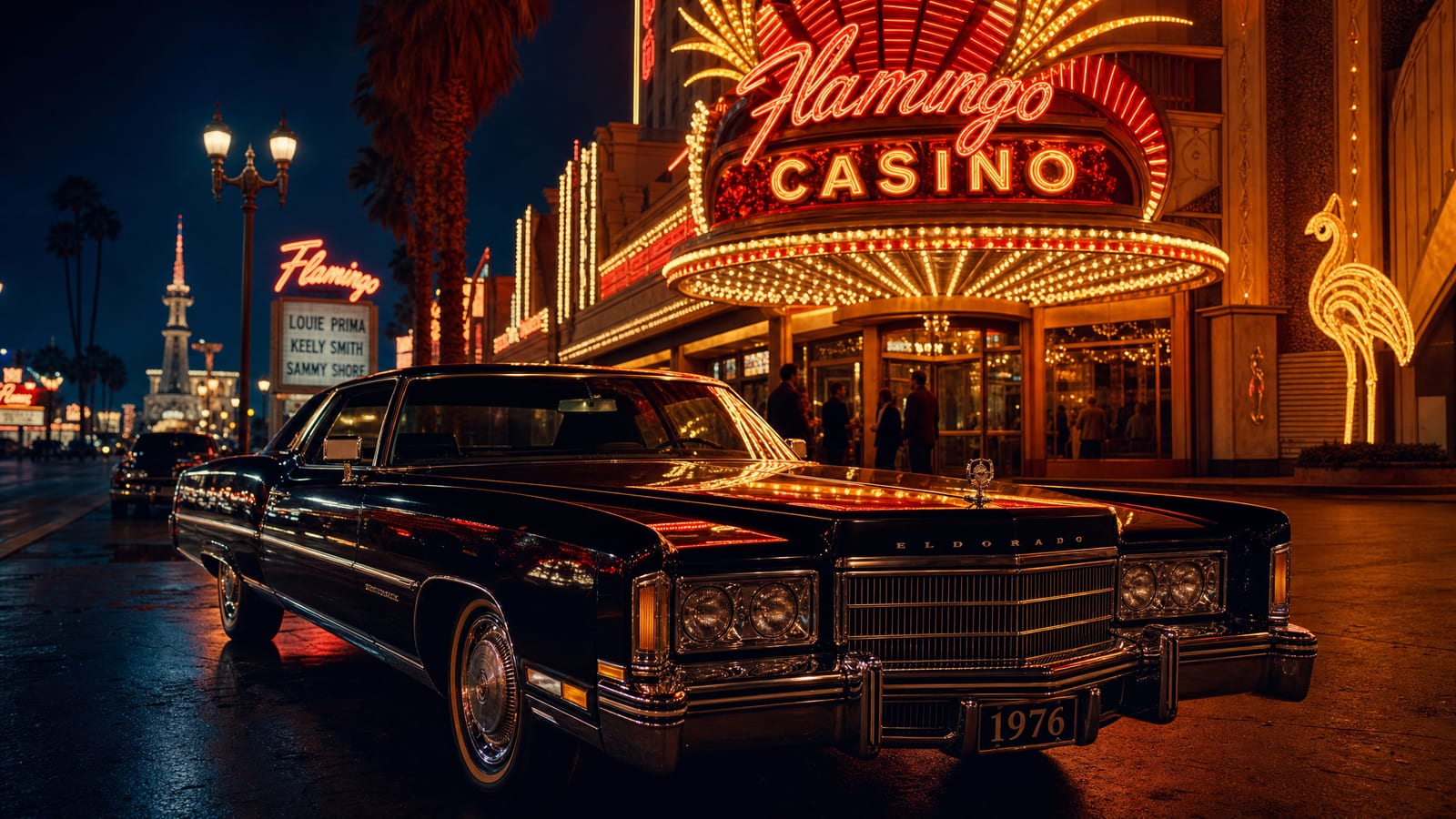
On October 4, 1982, Rosenthal walked out of Tony Roma's restaurant at the Sixth & Sahara shopping centre and got into his Cadillac. When he turned the key, a bomb detonated beneath the car.
By rights, he should have died. Two factors saved his life:
- His driver's side door was open when the bomb went off, and the blast ejected him from the vehicle rather than incinerating him inside it
- Two bystanders pulled him away from the burning car moments before the fuel tank ignited, launching the 4,000-pound vehicle into the air and causing significant damage to surrounding buildings
Rosenthal survived with burns and injuries but lived to tell the tale. He died in 2008 at the age of 79 — of a heart attack, not a car bomb.
Who Did It?
The bombing's perpetrator has never been officially identified, and the case remains technically unsolved. The most widely accepted theory points to Spilotro, who had reportedly been having an affair with Rosenthal's wife and whose relationship with Rosenthal had become openly hostile. However, Spilotro himself was murdered by the Chicago Outfit in 1986 — beaten to death and buried in an Indiana cornfield — taking whatever secrets he held to his grave.
The FBI later revealed that Rosenthal had been an informant, which adds another layer of complexity to the question of who might have wanted him dead and why.
Casino: The Film vs. The Reality
Scorsese's Casino is one of the greatest films ever made about gambling and organised crime, but like all dramatisations, it takes liberties with the historical record. Here's how the real story compares to what you see on screen:
Sam "Ace" Rothstein (Robert De Niro) = Frank Rosenthal
De Niro's portrayal captures Rosenthal's analytical brilliance and his obsessive attention to detail, but the film somewhat softens his criminal associations. The real Rosenthal was deeply embedded in organised crime from the beginning of his career, not merely a talented handicapper who got drawn in reluctantly.
Nicky Santoro (Joe Pesci) = Anthony Spilotro
Pesci's Nicky is a terrifying portrait of Spilotro's violence and volatility. The real Spilotro was indeed extraordinarily brutal — he ran a burglary ring called the "Hole in the Wall Gang" and was suspected in numerous murders. The film's depiction of his relationship with Rosenthal's wife is believed to be accurate.
Ginger McKenna (Sharon Stone) = Geri McGee Rosenthal
Stone's Oscar-nominated performance captures the tragedy of Geri Rosenthal's life — a woman caught between a controlling husband and a violent lover, ultimately destroyed by addiction. Geri died of a drug overdose in Los Angeles in November 1982, just weeks after the car bombing.
Why Casino History Matters to Modern Players
You might wonder why any of this matters to someone sitting down for a session at an online casino in 2026. The answer is that understanding where casino gambling came from helps you appreciate how far the industry has come — and why the regulations that protect you today are so important.
The Las Vegas of Rosenthal's era was a place where organised crime skimmed profits, where players had no real protections, and where the house advantage was often supplemented by outright cheating. There were no independent audits, no random number generator certifications, no dispute resolution mechanisms.
Today, if you're playing at a casino licensed by the Malta Gaming Authority (MGA) or operating under Ireland's new Gambling Regulatory Authority of Ireland (GRAI) framework, you're protected by:
- Regular independent audits of game fairness
- Certified random number generators
- Segregated player funds
- Clear terms and conditions
- Dispute resolution services
- Responsible gambling tools
The mob-run casinos of 1970s Las Vegas were the Wild West. Modern regulated online gambling is something entirely different — and considerably safer for players.
The Enduring Fascination with Casino Culture
The sale of the Sixth & Sahara property is a reminder of why casino culture continues to captivate us. There's something about the combination of high stakes, glamour, danger, and human drama that makes gambling stories irresistible — whether they're playing out on a cinema screen or in the pages of a true crime book.
Scorsese understood this when he made Casino. The film isn't really about gambling — it's about power, greed, love, and betrayal, with the casino as the perfect backdrop for all of these themes. The house always wins, but the real drama is in what people do in pursuit of the house's money.
For those of us who enjoy gambling as entertainment rather than as a criminal enterprise, the story of Lefty Rosenthal serves as a fascinating historical footnote — a reminder of how different the industry once was, and how much better it has become.
Visiting Las Vegas: The Casino History Trail
If you're planning a trip to Las Vegas — and it remains one of the world's great gambling destinations — the Sixth & Sahara site is just one stop on what you might call the Casino history trail. Other notable locations include:
- The Stardust site (now the Echelon/Resorts World Las Vegas): Where Rosenthal ran his operation and the skim took place
- The Riviera (demolished in 2016): Another mob-connected property from the era
- The Mob Museum (downtown Las Vegas): The definitive resource on organised crime's relationship with Las Vegas, with extensive coverage of the Rosenthal and Spilotro stories
The Mob Museum in particular is worth a visit for any serious casino enthusiast. It tells the story of how Las Vegas was built, who built it, and what it cost — in human terms as well as financial ones.
Modern Casino Entertainment: A World Away from the Mob Era
While the history is fascinating, today's casino landscape — both in Las Vegas and online — is a world away from the Rosenthal era. If you're looking for great casino entertainment without the organised crime, check out our top-rated online casinos for Irish players, or explore our latest bonus offers to get the most from your gaming budget.
And if you want to experience a little of that old Las Vegas glamour from the comfort of your own home, many of the best online casinos now offer live dealer games — real dealers, real cards, real roulette wheels, streamed in high definition. It's about as close as most of us will get to the Stardust circa 1975, without the risk of finding a bomb under our car.
The Bottom Line
The sale of Lefty Rosenthal's car-bombing site for €4.6 million (approximately $4.95 million) is a small piece of Las Vegas history changing hands. But it's also a prompt to reflect on the extraordinary story of a man who helped shape modern casino culture — for better and for worse. Frank "Lefty" Rosenthal was brilliant, ruthless, and ultimately tragic. His story, immortalised by Scorsese and De Niro, continues to resonate because it speaks to something fundamental about the human relationship with gambling: the thrill of the game, the seduction of easy money, and the price that's sometimes paid.
For the rest of us, the lesson is simpler: enjoy the games, play within your means, and be grateful that the casinos you play at today are regulated, audited, and accountable. It wasn't always this way.
Interested in the history of casino gaming? Check out our comprehensive casino guides for everything from game rules to strategy tips.


